Why Rebounding Is One of the Most Effective Low-Impact Exercises
Rebounding looks simple from the outside.
You step onto a mini trampoline. You begin to move. You feel your body respond almost immediately.
But what’s happening beneath that simplicity is remarkably sophisticated.
A rebounding workout creates a unique combination of gravity, acceleration, muscular engagement, and rhythmic repetition that you simply cannot replicate on hard ground. The result is a form of exercise that strengthens, conditions, and supports the body — without the wear and tear of traditional cardio.
This is why people who discover rebounding often say the same thing:
“Why didn’t I know about this sooner?”
Lymphatic System Stimulation Explained
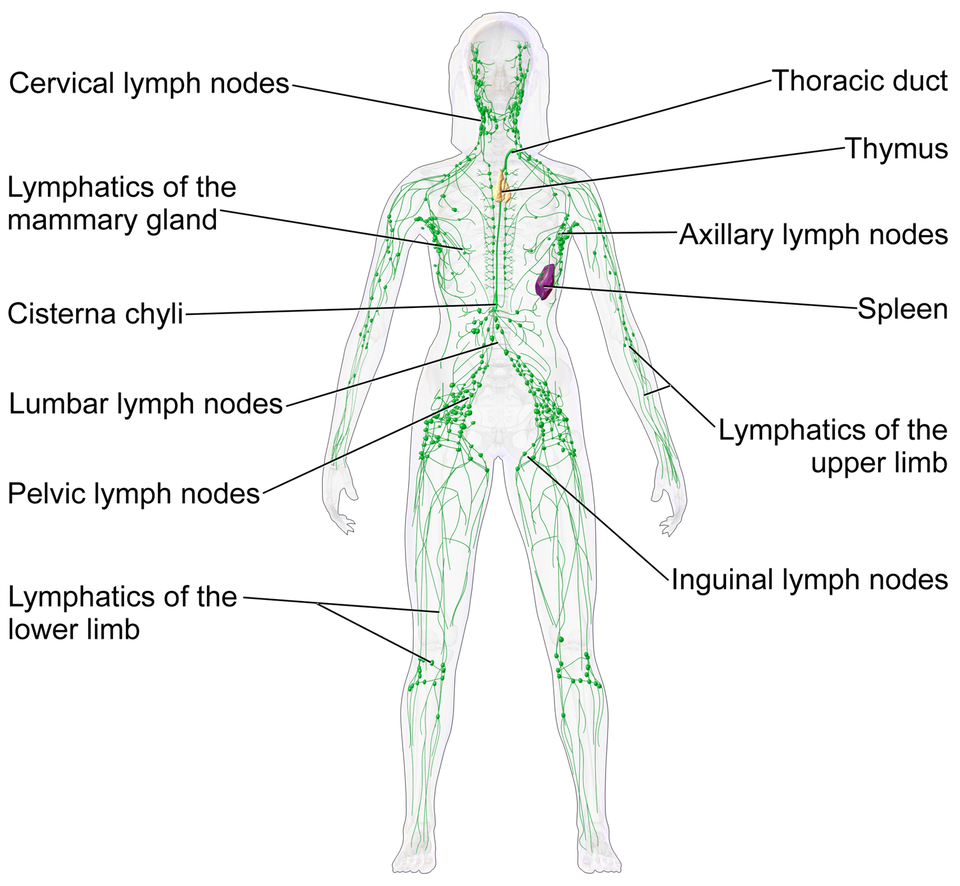
Unlike the cardiovascular system, the lymphatic system doesn’t have a pump.
It relies on movement — specifically changes in pressure — to circulate fluid, remove waste, and support immune function.
Rebounding creates a repeated cycle of:
Weightlessness → Gravitational Load → Release
That alternating pressure acts like a natural assist for lymphatic movement.
This is why rebounding is often described as a lymphatic drainage exercise — not because it forces the system, but because it supports what the body is already designed to do.
Participants frequently notice:
A sense of lightness after workouts
Improved circulation and warmth
Reduced feeling of stagnation from sedentary routines
It’s movement that encourages flow rather than strain.
Joint-Friendly Cardio That Builds Instead of Breaks Down
Traditional cardio often depends on repetitive impact:
Foot meets ground.
Force travels through joints.
Repeat hundreds — sometimes thousands — of times.
Rebounding changes the surface, and that changes the outcome.
The rebounder absorbs much of the deceleration force, allowing you to:
Elevate heart rate without pounding
Train longer with less recovery demand
Protect knees, hips, and spine
Build endurance sustainably
This makes rebounding an ideal low-impact cardio workout for:
People returning to exercise
Active aging populations
Athletes balancing high-load training
Anyone tired of workouts that hurt more than they help
You still work hard.
You just don’t pay the same physical price.
Core Activation Happens Every Bounce
On solid ground, your body can “check out” between movements.
On a rebounder, that’s not possible.
Because the surface is dynamic, your body must stabilize continuously.
Your deep core muscles engage reflexively to maintain balance, posture, and alignment.
That means:
Core activation isn’t isolated — it’s integrated
Postural muscles strengthen naturally
Balance and coordination improve over time
Strength develops through repetition, not force
Many participants are surprised to discover that rebounding feels like cardio…
yet produces strength and stability gains they didn’t expect.
Mental Health, Rhythm, and the Nervous System
There’s another benefit people don’t anticipate until they experience it:
Rebounding is rhythmic.
The consistent up-and-down motion creates a pattern the nervous system recognizes as regulating rather than stressful. Instead of triggering the “push harder” response common in high-intensity workouts, rebounding often produces:
Elevated mood during and after sessions
A sense of mental clarity
Reduced perception of effort
Greater workout consistency
Movement becomes something you return to, not something you recover from.
This shift is one of the reasons rebounding supports long-term adherence — the true predictor of fitness success.
Scientific Support & Historical Perspective
Rebounding has been studied and explored for decades because of how it uniquely combines:
Gravitational loading and unloading
Neuromuscular coordination
Cardiovascular conditioning
Reduced orthopedic stress
Fitness professionals have long recognized that this combination allows for meaningful training stimulus without excessive mechanical strain.
Radical Rebounding builds on that understanding with structured programming designed to:
Progress safely
Integrate strength and endurance
Support whole-body conditioning
Make movement sustainable for real life
This is not random bouncing.
It is a deliberate method built around how the body adapts best.
The Real Benefit: A Workout You Can Keep Doing
The greatest benefit of rebounding isn’t just physiological.
It’s that people continue doing it.
Consistency is where strength builds.
Consistency is where energy improves.
Consistency is where change happens.
And consistency only happens when movement feels supportive enough to stay with.
Experience the Benefits Yourself
You don’t need to understand every mechanism before starting.
You just need to step on and feel what your body recognizes immediately.
Inside our guided sessions, you’ll learn how to move safely, progressively, and confidently — whether you’re brand new or returning after years away from fitness.
Start exploring rebounding from home and experience the difference firsthand.
Begin Your First Session by clicking the button below.
Rebounding isn’t about doing more.
It’s about moving in a way your body is willing to repeat.
And that’s where real transformation begins.
Bounce It Out
TRY These BASIC Mini Trampoline Exercises BEFORE JUMPING INTO RADICAL REBOUNDING WORKOUTS
“Rebound exercise is The most efficient, effective form of exercise yet devised by man."
-NASA
The above statement is one of several made in a scientific study published in the Journal of Applied Physiology 49(5):881-887, 1980, which confirms many of the statements previously made in the "Miracles of Rebound Exercise". The research was performed by the Bio mechanical Research Division, NASA-Ames Research Center, Moffett Field,California, in cooperation with the Wenner-Gren Research Laboratory, University of Kentucky, Lexington, Kentucky.
WHY BOUNCE?
WHAT ARE THE BENEFITS OF REBOUNDING EXERCISE AND MINI-TRAMPOLINE WORKOUTS?
Working out on a mini trampoline has MANY health benefits. Because the bungees on the JUMPSPORT trampoline absorb the shock , the exercises you perform have a lower impact on your joints. Easier on the joints equals less pain. This means that it may be more comfortable (and/or safer) for you to execute certain moves on a trampoline compared to solid ground. In fact, exercise regimes performed on a mini trampoline have been shown to improve blood pressure, blood sugar, cholesterol levels, pain, and quality of life.
Mini trampolines are used for those recovering from injury, they’re also very effective for those without injuries who are looking to get an intense full-body workout, according to our experts.
Here are some of our favorite moves to begin you Radical journey, pre-class practice.
RUNNING MAN PLYOS
Like jogging at super speed, running man plyos have you lift your knees much higher and more quickly than with a simple jog. Torski tells us that “for clients with painful joints, this exercise offers the opportunity to work on a non-impact surface.” You’ll get the workout of running intensely free from the impact of it, and “this exercise also functions as high intensity interval training.” To get a HIIT workout from running man plyos, “jog casually for 15 seconds, and then sprint with high knees for the next 15 seconds, alternating for one minute with a 30 second rest.”
JUMPING JACKS
We’re all familiar with this exercise, which is one of the most common warmup moves to get your whole body/mind awakened. This classic movement can be jarring on the joints, so by taking it to the mini trampoline you're allowing the mat to absorb the impact, not your body. We suggest it before more intense work, noting “this is a wonderful full-body exercise that works really well for warmups before a cardio session.”
JUMPING AB TWISTS
A multifaceted move with as many benefits, a rebound instructor, John states, “ab twists on a trampoline get your heart rate pumping, and a good dose of cardio in there, while also toning and targeting your obliques.” He suggests that you start slow with “gentle bouncing on the trampoline, not going all-out.” Arms move in the opposite direction of the knees. Knees should be close together to engage the core and encourage better balance. A wider stance is helpful for those who are just beginning.
QUICK FEET
Also known as football runs, this move involves a speedy back and forth motion with your legs. Some instructors may have you with weight shifted to the toes and lower abdominal muscles engaged so that the core can work overtime, shuffling your weight back and forth while tapping your feet as quickly as you can. These flex your entire leg muscles but especially your calves. You’ll feel the burn very quickly, but for best results you should “try to keep it up for intervals of 20-30 seconds, repeated 3-4 times.” This is the best move for reducing cellulite.
LOW-IMPACT TRAMPOLINE JOGGING
What could be simpler than jogging? This simple movement allows for a great cardio workout twice as effective as any floor based fitness. With less impact than jogging on the ground or a treadmill. NASA discovered that a 10 minute bounce is equal to a 30 minute jog on a hard surface. Mini trampoline jogging allows for full body movement and is accessible for all fitness levels. “Jogging on a hard surface causes more injuries than any other sport.” Albert E. Carter, The Miracles of Rebound Exercise. Another great reason to jog on a mini trampoline.
SINGLE LEG HOPS
This is precisely what it sounds like: you’ll hop on each single leg twice, increasing to as much as 4 hops on each side. Alternating back and forth between them and keeping balance by alternately raising your arms at your sides. One leg at a time is a full body exercise targeting hamstrings, glutes, and core while working on balance and agility. This move strengthens balance and proprioception (where we are in time and space) so that we have more confidence in our gait as we age. The more we use it, the less chance we have of losing it.
LUNGES
Lunges are a classic way to shape your legs, glutes,and entire lower body. To make lunges more interesting, try trampoline lunges by “placing one foot on the (trampoline) netting and the other on the ground.” You’ll find it different than lunging on the ground because “performing the lunge movement this way provides additional momentum, and therefore, additional challenge as your legs and glutes work to stabilize your entire body, including your back”, as stated by rebounding instructor, Tami. For the perfect booty lift, lunge!
JUMP SQUATS
Combining a jump with a squat is a powerful move, and the mini trampoline version is done similarly to how you’d do it on the ground. These will improve lower body strength and burn calories faster than regular squats. We recommend that you start with your feet facing forward, a little more than shoulder-width apart. Hinge at your hips, moving your butt back and down into a squat stance before pushing off the balls of your feet into the air. Land in your starting position, feet about shoulder-width apart. Try 3-5 at a time, increasing to 10-15 per set. Break it up with jumping jacks or down bounce.
BASIC BOUNCE
This is a great move for stimulating the lymphatic system to aid in detoxification. Keep feet slightly wider than hip width apart, shoulders open, pressing through flat feet with the focus of weight through the heels while pushing into the trampoline. Notice every muscle in the body is engaged for a full body workout and a gentle cardio workout. Full body toning, detoxification and most importantly, it’s fun.